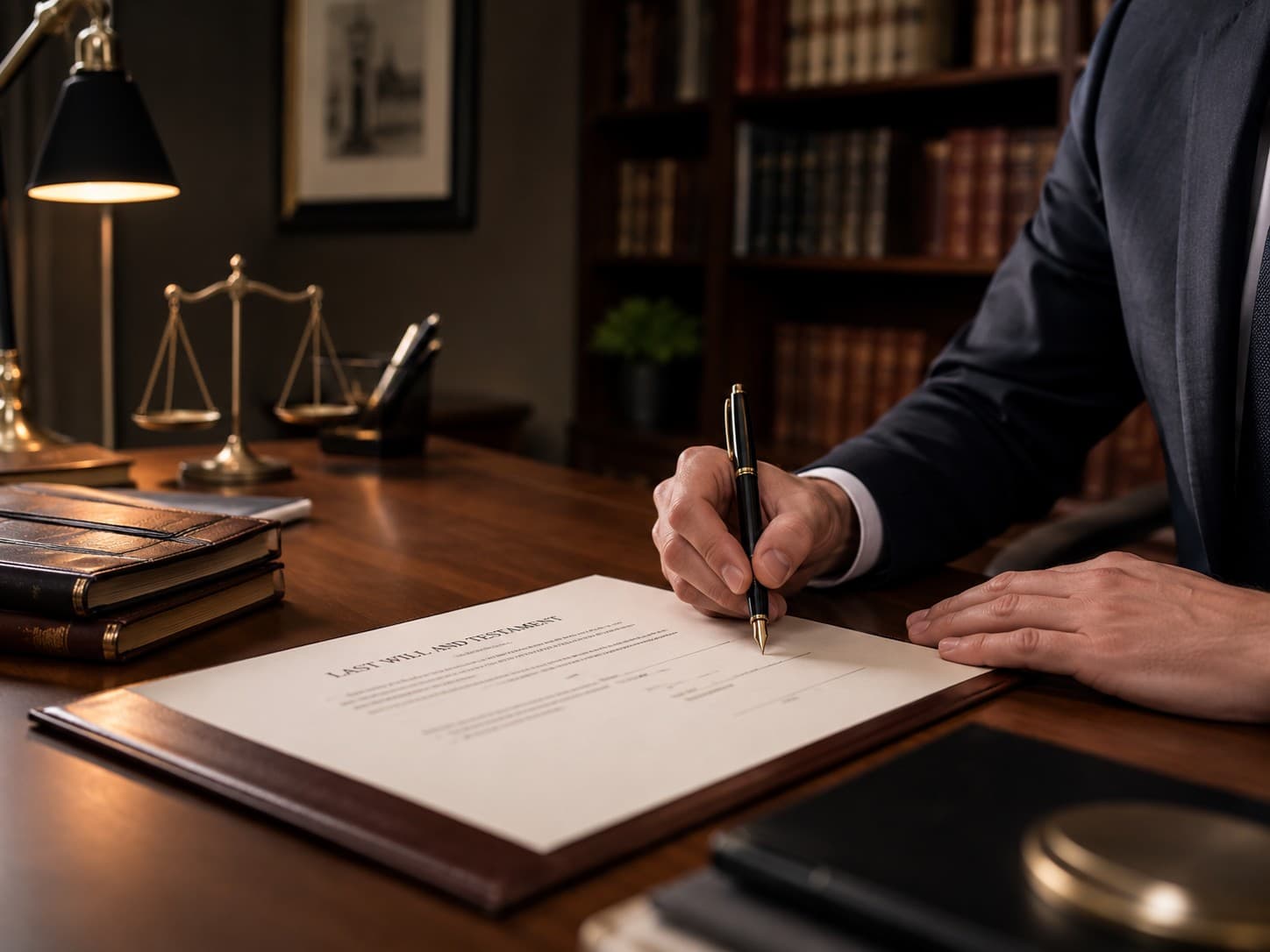
Accepting an inheritance is not just a matter of signing at a notary’s office
Accepting an inheritance in Mallorca may, at first glance, seem like a straightforward process. However, behind that decision lie legal, tax and financial consequences that are best analysed carefully. Accepting an inheritance involves assuming rights, but it may also entail obligations, liabilities, debts or disputes between heirs.
Therefore, before signing any document, it is advisable to examine the full picture: whether there is a will, who the heirs are, what assets form part of the estate, whether there are any outstanding debts, what taxes need to be settled, and whether all parties concerned agree with the distribution.
A properly handled inheritance does not begin with the signature, but with a prior analysis of the documentation and the consequences of accepting it.
First step: check whether there is a will
The first step is to establish whether the deceased made a will. To do this, one usually requests the death certificate, the certificate of last will and testament and, where applicable, a certified copy of the will. These documents reveal whether the deceased had made arrangements for their succession and before which notary the last valid will was drawn up.
If there is no will, it will be necessary to apply for a declaration of heirs. This procedure determines who is legally entitled to inherit in accordance with the applicable regulations. In cases of inheritance with clear family ties, this can be a relatively straightforward process, but where there are complex family relationships, second partners, children from different relationships or assets spread across various locations, the legal analysis becomes particularly important.
Step two: identifying assets, rights and debts
An inheritance does not consist solely of properties, land or bank accounts. It may also include vehicles, shares in companies, claims, insurance policies, household effects, outstanding tax liabilities or debts owed to third parties. Before accepting the inheritance, it is advisable to draw up as comprehensive an inventory as possible.
This inventory helps to assess whether the inheritance is a net gain, whether there are any significant liabilities, or whether it might be prudent to consider options such as acceptance subject to inventory. This option can be useful when the extent of the debts is not known with certainty, as it allows the heir’s liability to be limited under certain legal conditions.
Documentation typically required for an inheritance
- Death certificate.
- Certificate of last will and testament.
- Certified copy of the will, if any.
- National identity card or other identification documents for heirs and legatees.
- Property deeds and simple registry extracts.
- Bank statements showing the balance as at the date of death.
- Property tax receipts, land registry details and tax documentation.
- Information on loans, encumbrances, debts or guarantees.
Step three: assessing the tax implications
The settlement of an inheritance has significant tax implications. In Mallorca, as in the rest of the Balearic Islands, the main taxes to be considered are Inheritance and Gift Tax and, if there are urban properties, the municipal capital gains tax. Deadlines are important and it is not advisable to leave these matters until the last minute.
Inheritance tax generally has a six-month deadline from the date of death, although an extension may be requested within the statutory period. The tax liability will depend on the family relationship, the value of the assets, current legislation, any possible reductions and allowances, and the specific circumstances of each heir.
At this stage, it is common to make valuation errors or to submit tax returns without having properly checked all the details. An incorrect valuation can lead to problems later on, particularly if there is property involved, unequal allocations, or future sales.
Step four: accepting and distributing the inheritance
Once the documentation has been reviewed, the estate identified and the tax implications assessed, the time comes to formalise the acceptance and distribution of the inheritance. This deed sets out who is accepting the inheritance, which assets form part of it and how they are to be distributed amongst the heirs.
When all the heirs are in agreement, the process can proceed more smoothly. However, if there are disagreements regarding the value of the assets, the distribution, the use of a family home or the interpretation of the will, conflicts may arise that can hold up the inheritance for months or even years.
Common mistakes when accepting an inheritance
- Accepting without first checking whether there are any debts.
- Failing to review the will with legal advice.
- Confusing an informal division of assets amongst family members with a valid distribution.
- Missing tax deadlines.
- Valuing property without sufficient technical or tax expertise.
- Failing to properly document agreements between heirs.
- Signing under family pressure without understanding the consequences.
The role of the solicitor in an inheritance
A solicitor does not only intervene when there is a dispute. Their role is also preventative: organising documentation, explaining the available options, highlighting risks, coordinating proceedings with the notary, reviewing tax matters and ensuring that the distribution of the estate complies with the deceased’s wishes and the applicable regulations.
In inheritance cases involving property, family businesses, heirs residing outside Spain or potential disagreements between family members, seeking advice from the outset can prevent higher costs. It also allows one to anticipate scenarios that are often not obvious to someone dealing with an inheritance for the first time.
In inheritance matters, acting swiftly is important, but acting with clarity is even more so.
Inheritance in Mallorca: proximity and knowledge of the local context
Inheritances involving assets in Mallorca may require coordination with land registries, notaries, banks, local councils and tax authorities. Furthermore, where foreign residents are involved or assets are situated in different jurisdictions, it may be necessary to analyse international regulations or determine which law applies.
At Autonell Abogados, we examine each inheritance on a case-by-case basis, taking into account the documentation, the family situation, the existing assets and each client’s objectives. The aim is to handle the succession with legal certainty, avoiding hasty decisions and seeking solutions tailored to each individual case.
If you need guidance on an inheritance, the division of an estate or a dispute between heirs, you can contact our office in Inca, Mallorca. We will review your situation and advise you on the most appropriate steps to take before making a final decision.
Note: this article is for information purposes only and is not a substitute for personalised legal advice. Each inheritance must be analysed according to its specific circumstances.